
MENU

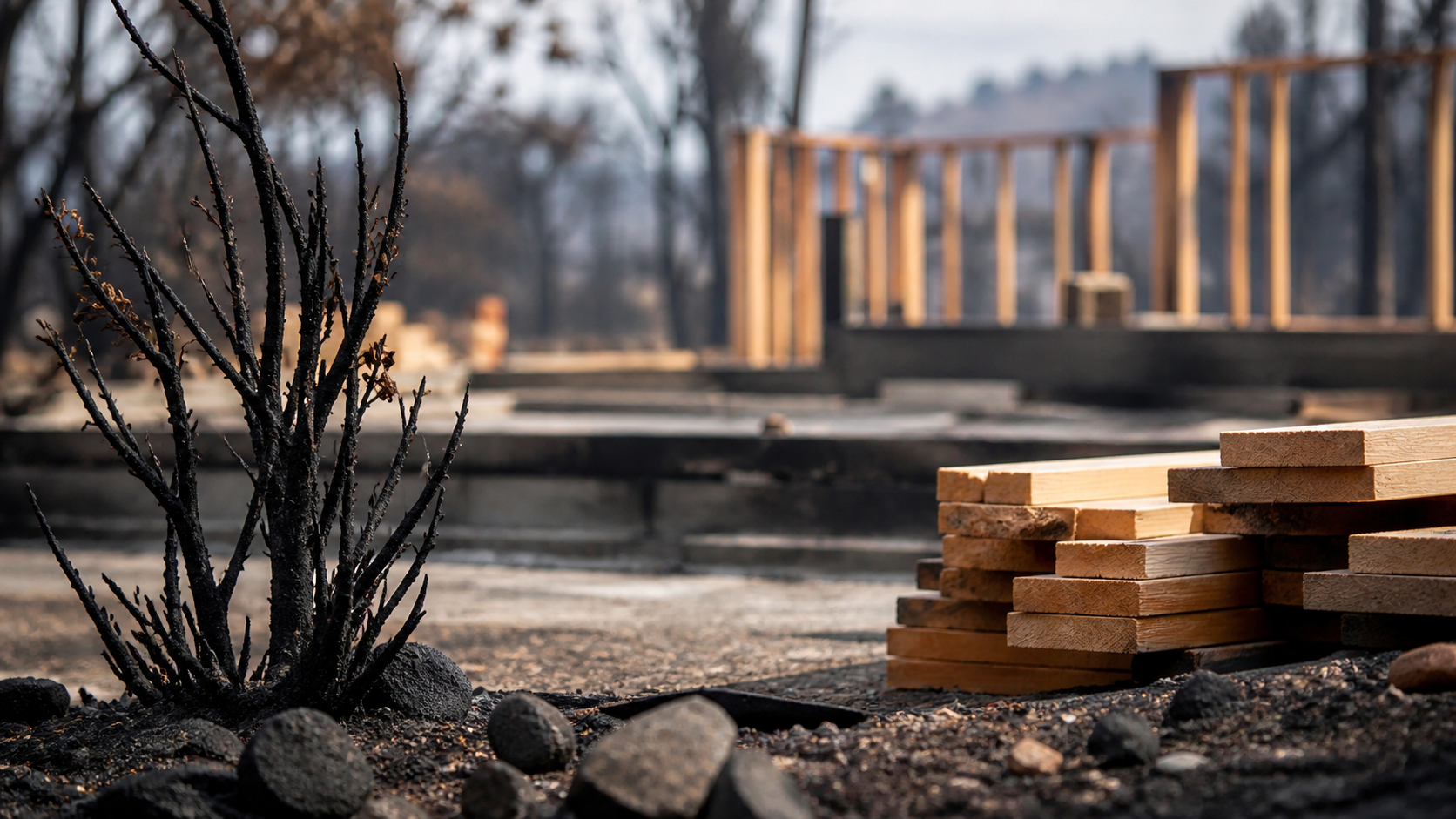
In the wake of California’s recent wildfires, property owners and developers are facing a critical question: what can you actually do with a property after a residential community has been destroyed?
A recent Los Angeles Times article highlights this issue in connection with Pacific Palisades Bowl Mobile Estates, a long-standing mobilehome park destroyed during the 2025 Palisades Fire. The property’s owners are reportedly evaluating redevelopment options that may differ from the site’s prior use.
For displaced residents, the issue is whether they can return.
For property owners and developers, the issue is different: what are your legal constraints, and how do they affect redevelopment strategy, timing, and risk?
Property Rights Survive the Disaster — But the Rules May Change
As a starting point, the destruction of improvements does not eliminate ownership of the underlying land. Property owners generally retain the right to rebuild or pursue alternative uses, subject to zoning, environmental review, and local land use controls.
Following the 2025 Palisades Fire, emergency executive orders issued by Gavin Newsom and Karen Bass were intended to accelerate rebuilding. These orders streamlined certain permitting and environmental review requirements for qualifying projects, particularly for like-for-like reconstruction, while still preserving oversight for safety and planning concerns.
The takeaway is straightforward:
property rights remain intact, but the regulatory framework can shift quickly after a disaster—and those shifts can materially affect redevelopment options.
In high-value markets like Pacific Palisades, this often creates a second layer of analysis: whether a damaged site presents a redevelopment opportunity rather than a simple rebuild.
Mobilehome Parks Add a Layer of Legal Complexity
Mobilehome parks operate under a different legal framework than traditional rental housing. Residents typically own their homes but lease the land beneath them, which creates statutory protections not present in standard landlord-tenant relationships.
These protections arise primarily under the Mobilehome Residency Law (Civil Code § 798 et seq.) and may include:
When a park is destroyed by wildfire, these protections do not disappear—but how they apply becomes highly fact-specific.
For example:
This is where redevelopment risk increases significantly.
Redevelopment vs. Rebuilding: The Real Decision Point
The central issue in these situations is not whether a property can be redeveloped—it is what conditions attach to that redevelopment decision.
Property owners evaluating a change in use should expect scrutiny in several areas:
At the same time, choosing not to rebuild a mobilehome park may carry its own legal and practical implications, particularly in jurisdictions focused on preserving affordable housing stock.
Affordable Housing Pressures Will Influence Outcomes
Mobilehome parks are often treated by policymakers as a critical source of “naturally occurring affordable housing,” particularly in high-cost coastal markets.
As a result, redevelopment decisions involving these properties frequently extend beyond traditional land use analysis and into broader housing policy considerations.
In practical terms, this means:
For developers and investors, this is not just a legal issue—it is a project feasibility issue.
Key Considerations for Property Owners and Developers
Before making any redevelopment decision involving a former mobilehome park site, property owners should evaluate:
Most importantly:
Bottom Line
Wildfires do not eliminate property rights—but they do change the landscape in which those rights are exercised.
For mobilehome park properties in particular, redevelopment decisions require careful analysis of overlapping legal frameworks, local policy considerations, and practical entitlement risks.
Property owners and developers who approach these projects strategically—and early—are better positioned to avoid delays, reduce risk, and preserve project viability.
Source: Los Angeles Times, Owners of Fire-Destroyed Palisades Mobile Home Parks Seek to displace residents for development deal, March 5, 2026
Real Estate & Land Use Group
Louis A. Galuppo, Esq. | Melania Mirzakhanian, Esq.
If you have questions regarding real estate development, land use compliance, or business matters affecting your property or company, the attorneys at G10 Law are available to assist. Our firm advises property owners, developers, and businesses throughout California on real estate, business, and banking matters. This blog post is provided for informational purposes only and does not constitute legal advice. Reading this post does not create an attorney-client relationship with G10 Law. You should consult with a qualified attorney regarding the specific facts and circumstances of your situation before making legal decisions.


